Delhi Specifics and Reminders
Newsletter #9

I started writing this newsletter from outside of Dublin for the first time since I launched it, and had to deviate from what I promised in August for an important reason. I couldn’t find it within me to continue waxing eloquent about my trip to Morocco after the recent earthquake there, and it also doesn’t seem like the right time to give away the prize I promised. This isn’t to say that I won’t write about Morocco or reveal the winner next month, but I thought it best to let some time go by before doing so.
A month of bad asthma took me to Delhi, mainly because my respiratory specialist is there and I’ve seen appointments take months to materialise in Ireland. Once I was on medication and recovering, I was able to take the liberty of going out to eat, seeing friends and creating a newsletter dedicated to food and drinks that have always triggered Delhi-specific memories for me.
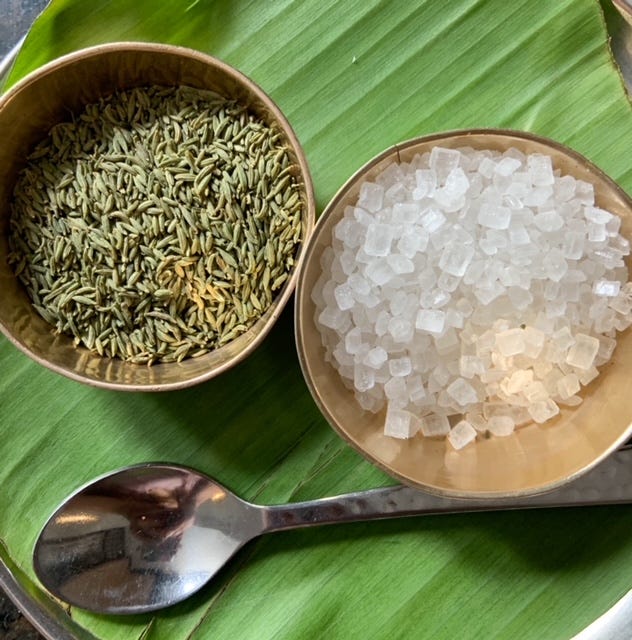
One of the first meals I went out for after I landed in Delhi was dosa, after months of complaining about bad dosa in Dublin. Dosa doesn’t actually belong to Delhi, but still feels like it does—with the countless chains that claim to specialise in it. I picked Naivedyam for both its reputation and proximity, and felt most cheered up by what arrived at the end of the meal: saunf (fennel seeds) and mishri (rock sugar). Dublin has no dearth of Indian restaurants, but I can’t recall one that serves the staple mouth freshener at the end of a meal.
Saunf and mishri are as important at desi restaurants as finger bowls. I haven’t eaten at a typical North Indian restaurant in Delhi in the last five or so years, or travelled through the South of India long or recently enough to identify whether they’ve been a fixture there too, but most North Indian restaurants worth their salt always brought out finger bowls after meals when I was younger. After meals, servers usually placed a small bowl of warm water with a slice of lemon swimming in it at your table, meaning for it to be the epitome of hospitality. Although nawab-esque, it was something I looked forward to. Dipping my fingers in lemon-infused warm water was comforting and felt like the hygienic thing to do before wipes and hand sanitisers became the norm.
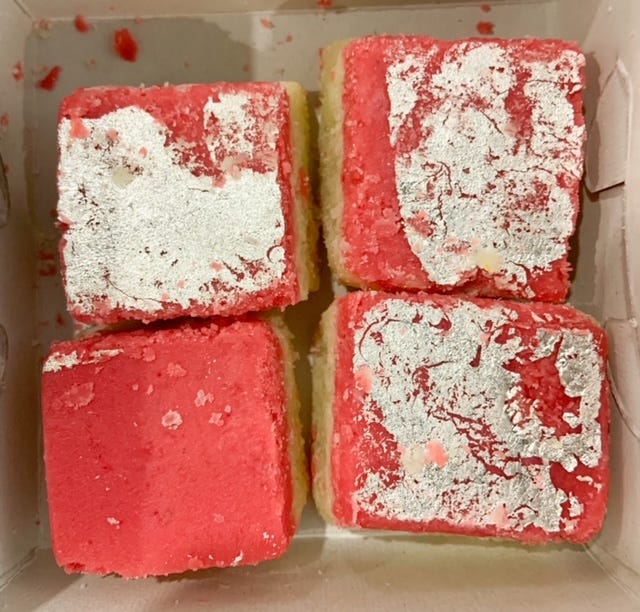
Besides these little post-meal rituals, I also grew up eating and drinking stuff that was very specific to the neighbourhood my ancestral home was in. My favourite sweet treat was the nariyal/coconut burfi from Bengali Sweet House, a sweet shop that was a five-minute walk from home. I was fascinated by the white and Barbie-pink cubes whenever I saw them, and began eating them because pink was my favourite colour growing up. One of those things that taste as good as they look, that burfi managed to carve a permanent spot within my heart. And so, one of the first boxes of goodies that I laid my hands on during my recent trip was, of course, filled with coconut burfi.
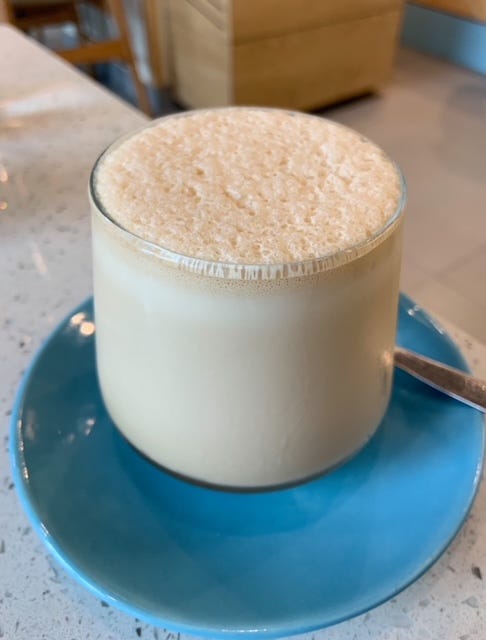
A lot has been said and written about childhood memories and food, and cold coffee—a drink that I haven’t really found outside of India—is an important marker of my earliest food memories. Every time my mum took me out to get a haircut, she followed up the salon visit with a pit stop at the cafe in what’s now called The Lalit Hotel. Our standard order was egg sandwiches and cold coffee. Cold coffee seemed fairly regular when I was growing up but I realise how specific it is to India after having lived in the UAE, UK and Ireland. Iced coffee is common in these countries, but I have never had a glass of blended coffee that uses both milk and ice cream anywhere besides India. It’s probably a sin in the books of coffee snobs, but it’s also a seriously addictive and satisfying summer drink.
Depaul’s, a little shop in Janpath, was another spot not too far from where I lived in Delhi as a child. Specialising in cold coffee, Depaul’s was a favourite, not just for good cold coffee, but also the way they served it in glass bottles (with a straw). Delhi has always had the monopoly when it comes to good street food (even if people from Mumbai and Lucknow argue otherwise), but Depaul’s is the place to go for a street-style drink that’s not banta/desi lemonade.
Speaking of street food, Delhi saw a momo boom in the mid-late 2000s. The Tibetan dumplings, served with a spicy chutney, had become the go-to snack for students across the city back then. Endearing because of their affordability and growing ubiquity, momos were so popular when I was in college that they had beat gol guppe/pani puri as the city’s street food of choice. Vendors with steamers stood in Delhi’s iconic markets, handing out plates of chicken or vegetarian momos with generous servings of spicy chutney. Restaurants began experimenting with different kinds of momos, and fried and tandoori versions were born.
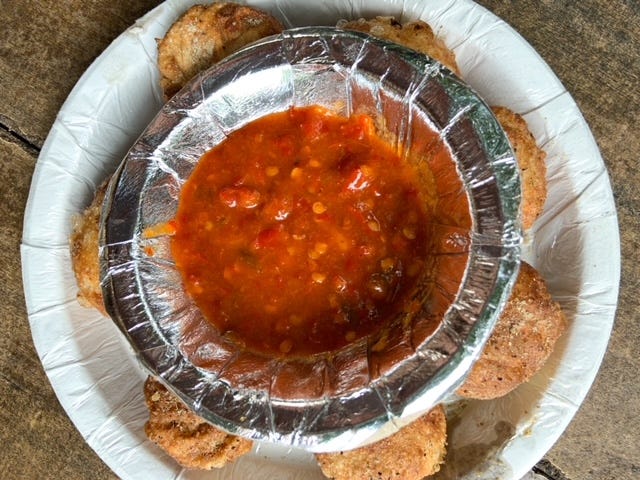
I was as smitten with momos as the next person, although the frenzy seems to have mellowed now. However, I didn’t let go of the chance to eat a plate of fried momos at Kasturba Gandhi Marg near Connaught Place last month. Daksh Chinese Food, a van that serves Indian-Chinese food, impressed me with its wonderfully crispy fried momos and appropriately spicy chutney. The friend I was with ordered the chilli paneer and fried rice, both of which would put many Indian-Chinese restaurants to shame.
Now that I’m back in Dublin, I’ve made it my next mission to hunt a good plate of momos down here. I’ve been hearing and reading about new openings that have momos on the menu and I think a thorough investigation is in order. While I honour my cravings, I’m still undecided about where my next home will be. Back in August, I thought I was leaving Dublin for good, but I’ve seen that Ireland has a way of keeping me tied to it. I returned three days ago and found myself nominated for the Irish Food Writing Awards in the Writing on International Cuisines Category this afternoon. All finalists are invited to attend the Awards night on October 26th and maybe, just maybe, I should resolve to stay until then.
That was a delightful read. It took me back to the Delhi I once called home. Great going Vritti! Also loved your debut piece for the Irish Times.